

With two months left in the year, 2026 is on track to be the slowest year for home sales in the Toronto area in more than a quarter century.
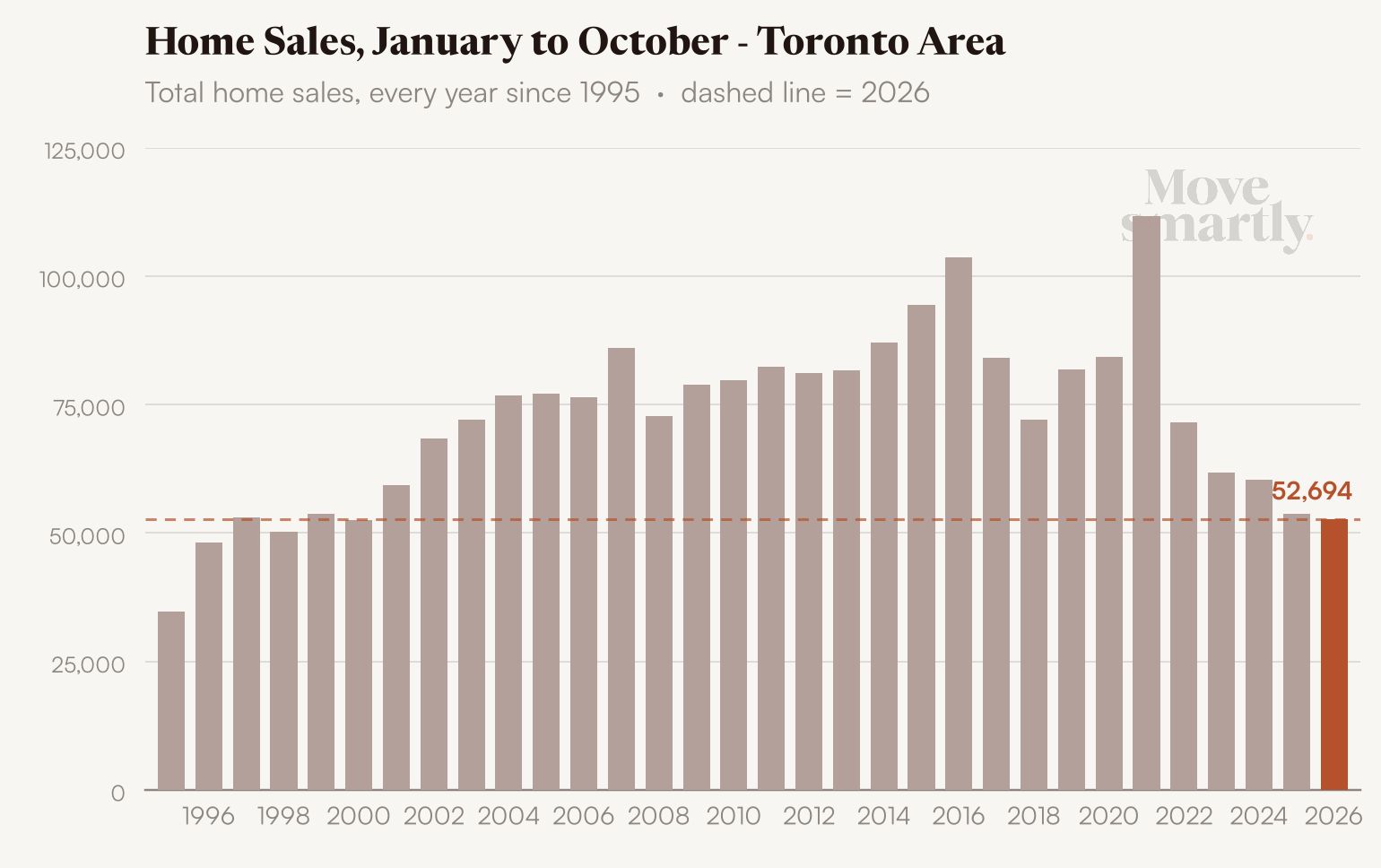
According to the Toronto Regional Real Estate Board (TRREB), 52,694 homes sold between January and October this year, down 2% from the same period last year.
It's the lowest total for the first ten months of any year since 2000.
To put that number in context, sales this year are 33% below the average of the past ten years and less than half of the 111,622 homes that sold over the same months in 2021.
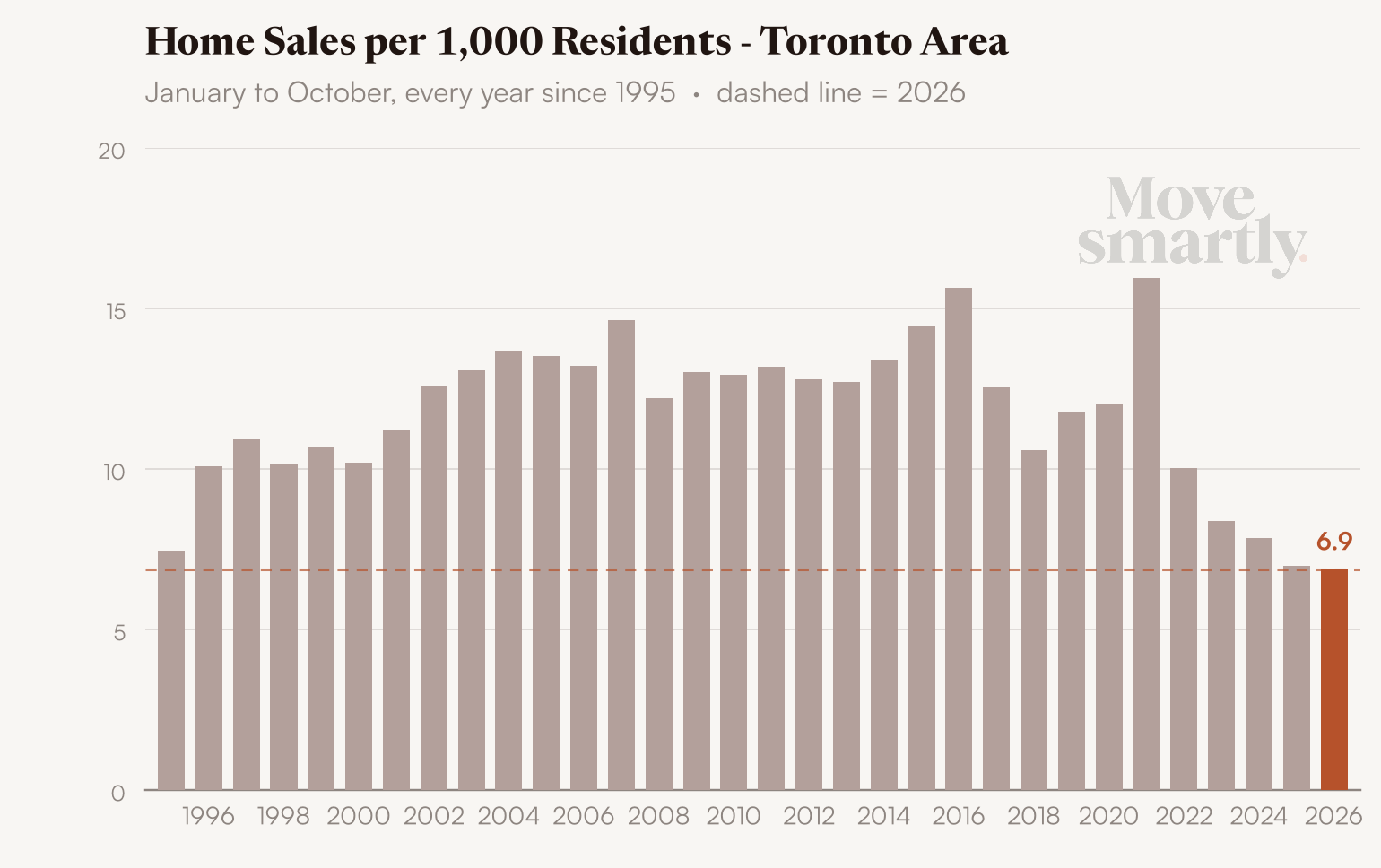
But comparing sales this year against 2000 understates how significant this year’s slowdown really is, because the Toronto area has roughly 2.5 million more people today than it did back then.
When we adjust for population, there were 6.9 home sales for every 1,000 residents in the first ten months of this year, compared to 10.2 in 2000.
It’s also the lowest level on record going back to 1995.
So where did all the buyers go?
There have been roughly 20,000 to 25,000 fewer people buying homes over the past couple of years than we would normally see. But falling home sales don’t mean the demand for housing is down, it means the demand for buying a home is down. Rising interest rates and economic uncertainty have pushed many buyers to the sidelines, but many still need a place to live, so they are deciding to rent instead, and we can see that in the rental data.
Over the same ten months, there were 100,067 homes leased through the MLS, up 2% from last year and the most on record in our data, which goes back to 2003. It's the first time the total has passed 100,000 this early in the year, and it's more than double the 44,135 homes leased over the same months in 2016.
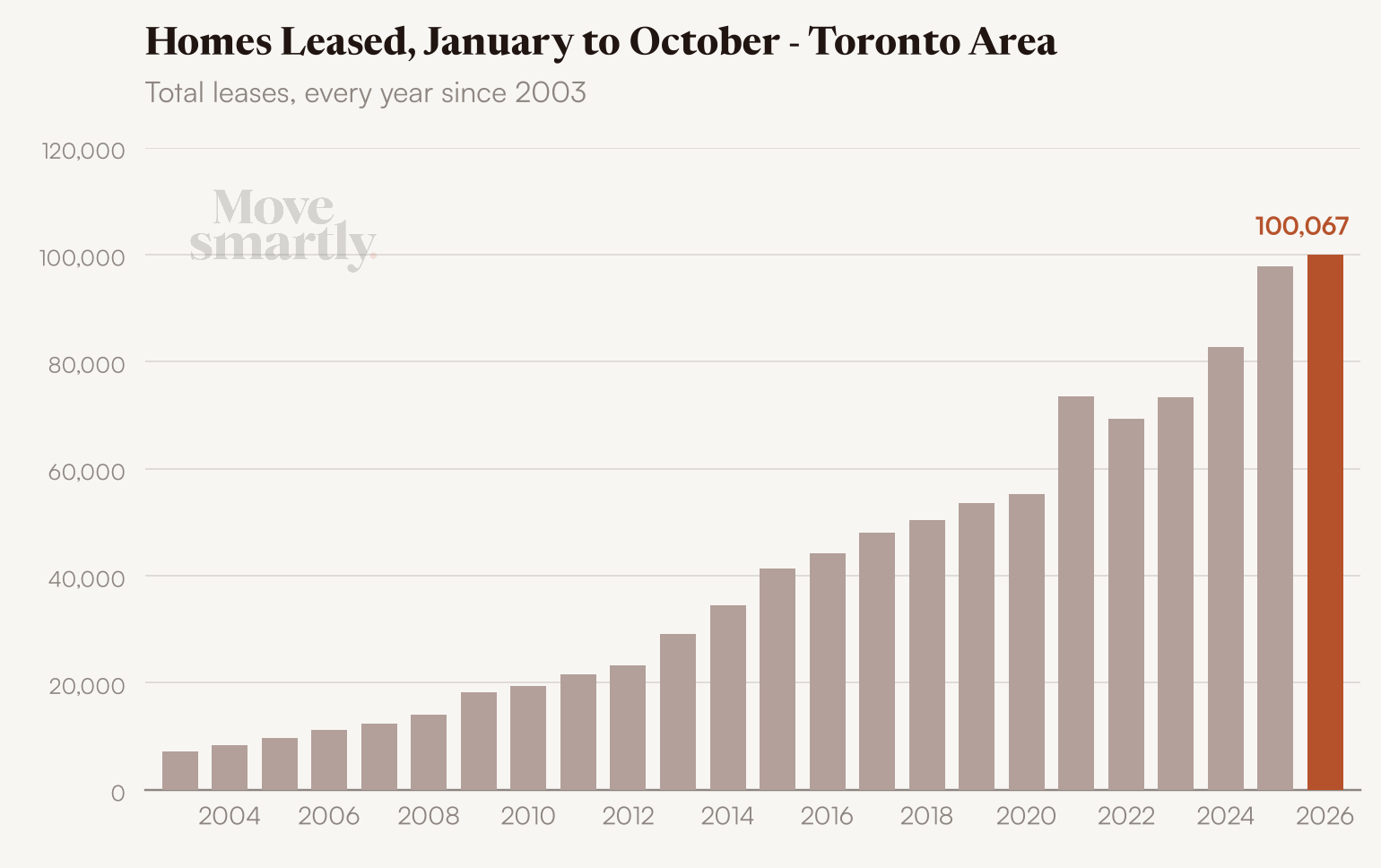
When we put the two numbers side by side, there are now almost two homes leased for every home sold in the Toronto area. Ten years ago it was the reverse - in 2016 there were more than two sales for every lease.
It's worth noting that these figures only capture homes leased through the MLS, most of them investor-owned condos, so they miss purpose-built rental buildings and homes rented privately.
For buyers who are in the market today, this means far less competition and more room to negotiate than they have had in years. For sellers, it's a reminder that there are simply fewer buyers out there, and pricing has to reflect that.
I don't expect this to change quickly. Until buyers have more clarity about where interest rates and the economy are heading, I expect sales to remain well below normal levels and the rental market to remain very busy.